


PDF Editor - PDF Reader
3.1130.00 Reviews
App Specs
- Version
- 1.0.1
- Updated On
- License
- Free
- Downloads
- 500,000+
- Developer
- IMAM
- Categories
- Productivity
- Platform
- Android
Screenshots
 Analysis by AppCompare
There is a particular kind of phone frustration that appears at the worst possible moment: someone sends a document, a form arrives as an image, or a file is saved in the wrong format, and the only practical device nearby is your phone. PDF Editor - PDF Reader is aimed at that recurring problem. It brings document opening, image-to-PDF conversion, and file-format changes into one productivity app instead of making me jump between separate tools.
After using it as a mobile document utility, I see its main value in convenience rather than in replacing a full desktop office suite. It is free, rated for Everyone, and developed by IMAM. The app has a 3.6 average from around 689 ratings and has passed 100K+ installs, so it has already attracted a meaningful group of Android users without feeling like a specialized professional platform.
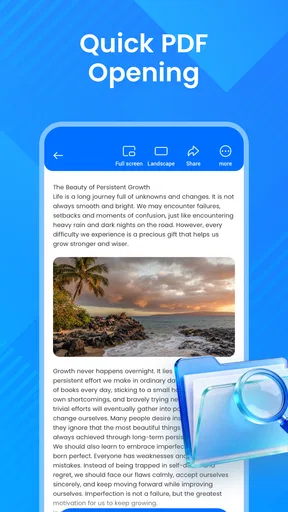
The important question is not whether a phone can technically open a PDF. Most modern phones can do that. The better question is whether I can handle a mixed collection of PDFs, office documents, and images without losing time looking for another app. That is where this utility makes the most sense, especially for quick, practical tasks rather than long editing sessions.
Turning a cluttered document task into a shorter workflow
I look at the workflow through a trust-first lens: a document converter is most useful when it helps me complete a small task without making me careless about the file itself. I would start with a non-sensitive sample, check the output, and decide whether the app earns a place in my routine. That practical test also sets up the next section’s closer look at how I would handle documents that deserve extra care.
The first useful setup is deliberately simple
On first use, I would treat this as a document-handling tool, not as the place where I permanently organize every file on my phone. The useful starting point is to open a few representative items: one PDF, one office document, and one image that I may want to convert. This gives a quick sense of how the app fits into my existing storage habits.
That small test matters because mobile document work often fails at the handoff. A file may live in a downloads folder, arrive through a messaging app, or be attached to an email. The app is most useful when it reduces the number of steps between receiving that file and producing something usable. I would keep the original file untouched and create a converted copy, particularly when the document is important or needs to be sent back to someone else.
The current version is 1.0.1 and it runs on Android 8.0 or later. That gives the app a reasonably broad device range, including phones that are no longer new but still handle ordinary document tasks well. I would still check the result of a conversion immediately after creating it, because the value of any format tool depends on whether the output preserves the content in a readable way.
Worth Reading Before You Choose

EA SPORTS FC Mobile 26 Is a Bigger Football Game, but It Takes Time

Flipboard Shows What News Apps Must Do Beyond the Feed

Switching to Android Auto Means Rethinking Your Driving Routine

Google Calendar Makes a Crowded Week Easier to Manage

Ludo King Makes the Most of the Minutes Between Plans

Baby Panda World Brings Quick Play to Modern Phones, but Its Game Library Feels Busy
One practical habit is to use clear filenames before sharing anything. A photo converted into a PDF can otherwise end up with an unhelpful camera-style name, making it harder to identify later. Renaming the file in the phone’s file manager, when necessary, is a small extra step, but it prevents confusion when several documents are being sent in the same conversation.
Where the app saves time in ordinary life
A realistic example is a school, rental, or administrative form photographed with a phone. Instead of sending several separate images, I can turn the pages into a PDF and share one document. That is a modest improvement, but it removes the awkwardness of explaining which image belongs first and makes the result easier for the recipient to download or print.
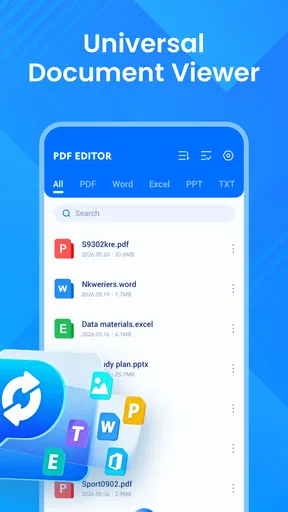
Another scenario is receiving an office document while away from a computer. I may not need to make extensive changes, but I do need to open it, inspect it, or change it into a more convenient format for forwarding. Having a single app that handles both PDF and office-document viewing reduces the need to guess which installed application will recognize the file.
It is also useful for quick personal archiving. A receipt, signed page, handwritten note, or printed reference can be captured as an image and converted into a PDF for keeping with related paperwork. I would not describe this as a replacement for a dedicated scanning system, but for occasional records it is a practical way to avoid a folder full of unrelated image files.
The time saving becomes clearer when the task is small but urgent. If I only need to convert one image, opening a large office suite can feel excessive. If I only need to read a document, installing a separate converter creates unnecessary friction. This app’s appeal is the compact workflow: open, convert when needed, and move on.
Useful workflows that are easy to overlook
The first less-obvious workflow is using image conversion to standardize documents before sending them. A recipient may prefer one PDF rather than a group of images, not because the content changes, but because the file is easier to store and review. For multi-page material, I would prepare the images in the correct order before conversion. That simple preparation avoids sending a document whose pages appear out of sequence.
The second is using format conversion as a compatibility check rather than an automatic final step. When a file comes from an unfamiliar source, I would open the original first, then create the alternate format only if the next person or device needs it. Keeping both versions temporarily makes it easier to compare layout, page breaks, and visible text. This is particularly important for forms, tables, and documents with unusual spacing.
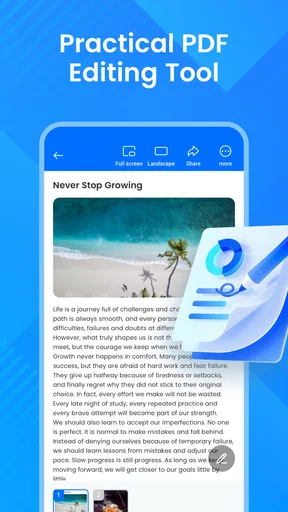
The third is separating viewing from editing expectations. The name suggests editing, but the confirmed core purpose is opening PDFs and office documents, converting images to PDF, and changing file formats. I would use it for practical document handling, while reserving detailed layout work, advanced annotations, or complex collaboration for a dedicated office or PDF application. That distinction prevents disappointment and keeps the app in the role where it is most efficient.
A fourth useful habit is checking the converted file from the perspective of the recipient. After creating a PDF from images, I would open it again and scroll through every page before sending it. This catches common mobile mistakes such as a sideways image, a cropped edge, or a page included in the wrong order. The extra check takes less time than asking someone to resend a document because the first copy was difficult to use.
How it compares with the usual alternatives
Compared with a basic phone file viewer, this app offers a broader document workflow because it is not limited to opening a single file type. The difference is most noticeable when I move from an image to a PDF or from an office document to another format. A simple viewer may be enough for reading, but it usually leaves conversion to another application.
Compared with a full office suite, PDF Editor - PDF Reader is more focused and potentially less intimidating for a one-off task. A large suite may be the better choice when I need rich formatting, spreadsheets, presentations, cloud collaboration, or extensive editing. For a quick conversion on a phone, however, installing or navigating a much larger tool can feel like using a toolbox to tighten one screw.
Compared with a dedicated scanning app, this utility is better understood as a general document converter. A scanning-focused alternative may provide a more specialized capture process for repeated paperwork, especially when image cleanup and document organization are central to the job. If I regularly digitize many pages, I would compare the results carefully before making this my primary scanner.
Compared with online converters, a phone-based app can be more convenient when I need to work directly from local files and avoid the extra cycle of opening a browser, uploading a document, waiting for processing, and downloading the result. The trade-off is that I still need to manage the resulting files responsibly on my device. For sensitive paperwork, I would avoid casual sharing and review the destination before sending anything.
Where friction remains
The app’s broad purpose is helpful, but broad tools can also create uncertainty. “Change file formats” covers a useful idea, yet different documents behave differently during conversion. A simple text document may transfer cleanly, while a file with tables, images, or carefully arranged spacing deserves closer inspection. I would never assume that a successful conversion automatically means a perfect reproduction.
Phone screens also impose a natural limit. Reading a short document is comfortable enough, but reviewing a long contract or correcting detailed content on a small display is tiring. If the task involves careful proofreading, repeated revisions, or precise page design, a computer remains the more sensible choice. This app saves time on short interventions; it does not remove the physical limitations of mobile work.
Another point of friction is file organization. A converter can create useful outputs, but those files still need sensible names and a reliable storage location. Users who already struggle with duplicate downloads may find that converting without a naming routine creates more clutter. My approach would be to keep the original and converted copy together until the result has been checked, then remove unnecessary duplicates.
The rating of 3.6 suggests a mixed overall experience rather than universal satisfaction. I would interpret that as a reason to test the app with the types of documents I actually handle. A utility like this can be perfectly worthwhile for occasional image-to-PDF work while still falling short for someone who expects a complete professional editor. The distinction between those two audiences is important.
Who should use it and who should skip it
I would recommend it to students, families, freelancers, and office workers who frequently receive documents on an Android phone and need a quick way to open or convert them. It is also a reasonable choice for anyone who occasionally turns photographed paperwork into a shareable PDF and does not want a separate application for every file type.
It is less suitable for people who need a complete document production environment. If your routine involves advanced formatting, tracked revisions, sophisticated annotations, document collaboration, or dependable high-volume scanning, a specialized tool will likely serve you better. The same applies if you need a carefully controlled publishing workflow where every page must retain exact positioning after conversion.
The free price makes experimentation easy, and the Everyone content rating makes it approachable for general household use. Still, free does not mean every workflow will be equally smooth. I would install it for a specific recurring need, test it with a non-critical document, and keep it only if the output and handling speed match that need.
My verdict after focusing on time saved
PDF Editor - PDF Reader succeeds when the problem is small, immediate, and document-related: an image needs to become a PDF, an office file needs to be opened, or a format needs to be changed before sharing. Its strongest quality is not ambitious editing power but the way it gathers several everyday actions in one place.
I like it most as a practical backup for moments when a computer is unavailable. The best results come from preparing images in order, preserving the original file, checking every converted page, and treating format changes as something to verify rather than blindly trust. Those habits make the app more dependable and reduce the small mistakes that usually create extra work.
My recommendation is straightforward: use it when convenience and quick document conversion matter more than advanced control. It can remove a surprising amount of mobile friction, but it should not be mistaken for a full desktop replacement. For occasional PDF and office-file tasks, the free Android app is worth trying; for complex editing or high-stakes formatting, I would choose a more specialized alternative.
Released on Jun 12, 2026, the app is still at an early stage, with version 1.0.1 currently available. That makes my final judgement practical rather than extravagant: IMAM has produced a focused utility with a clear everyday purpose. If your phone regularly becomes the only available document workstation, this is the kind of tool that can save a few steps exactly when those steps are most annoying.
Pros
- Edits text
- images
- and links directly inside PDF files.
- Supports annotations
- highlights
- stamps
- and freehand drawing.
- Scans paper documents and converts them into editable PDFs.
- Searches documents quickly
- including files with recognized text.
- Works with cloud storage for convenient file access and sharing.
Cons
- Some advanced editing tools require a paid subscription.
- Large PDFs may load slowly on older phones or tablets.
- OCR accuracy can vary with blurry or poorly lit documents.
- The interface may feel crowded for first-time users.
- Exporting files can occasionally change fonts or page formatting.
FAQs for PDF Editor - PDF Reader
What can PDF Editor - PDF Reader do?
PDF Editor - PDF Reader is designed to help you open, read, organize, and manage PDF documents on a mobile device. Depending on the version and available tools, you may also be able to annotate pages, highlight text, add comments, fill forms, sign documents, merge files, or make basic edits. It is most useful for everyday document viewing and light PDF work rather than advanced desktop publishing.
Is PDF Editor - PDF Reader free to download and use?
The application can generally be downloaded without an upfront payment, but some features may be restricted behind in-app purchases, a subscription, or advertising. Before relying on a specific tool, check the app’s current store listing and pricing details, since access to editing, exporting, cloud storage, scanning, or removing advertisements can vary between versions and regions.
Can I use PDF Editor - PDF Reader without an internet connection?
Basic reading is usually possible offline after a PDF has been downloaded or stored on your device. However, certain functions may require an internet connection, including cloud synchronization, online file conversion, account-based storage, document sharing services, or subscription verification. If offline access is important, test the main documents and editing tools before traveling or working without reliable connectivity.
Does PDF Editor - PDF Reader protect my documents and personal information?
You should review the application’s privacy policy and requested permissions before importing sensitive files. Documents may remain locally stored, but features such as cloud backup, online conversion, analytics, or sharing can involve data being transmitted to external servers. Avoid uploading confidential financial, legal, or personal documents unless you understand how they are stored, processed, and deleted.
Is PDF Editor - PDF Reader suitable for professional document editing?
The app can be convenient for reviewing documents, adding notes, completing forms, and making quick changes while away from a computer. Nevertheless, mobile PDF editors may have limitations with complex layouts, fonts, scanned text, large files, advanced security settings, and precise page design. For occasional edits it should be practical, while demanding professional workflows may still require desktop software.


